"Natural GLP-1" and Peptide Supplements: What the Science Actually Says
Author
Date Published
- Twitter
- Facebook
- LinkedIn
- Instagram
- Copy Link
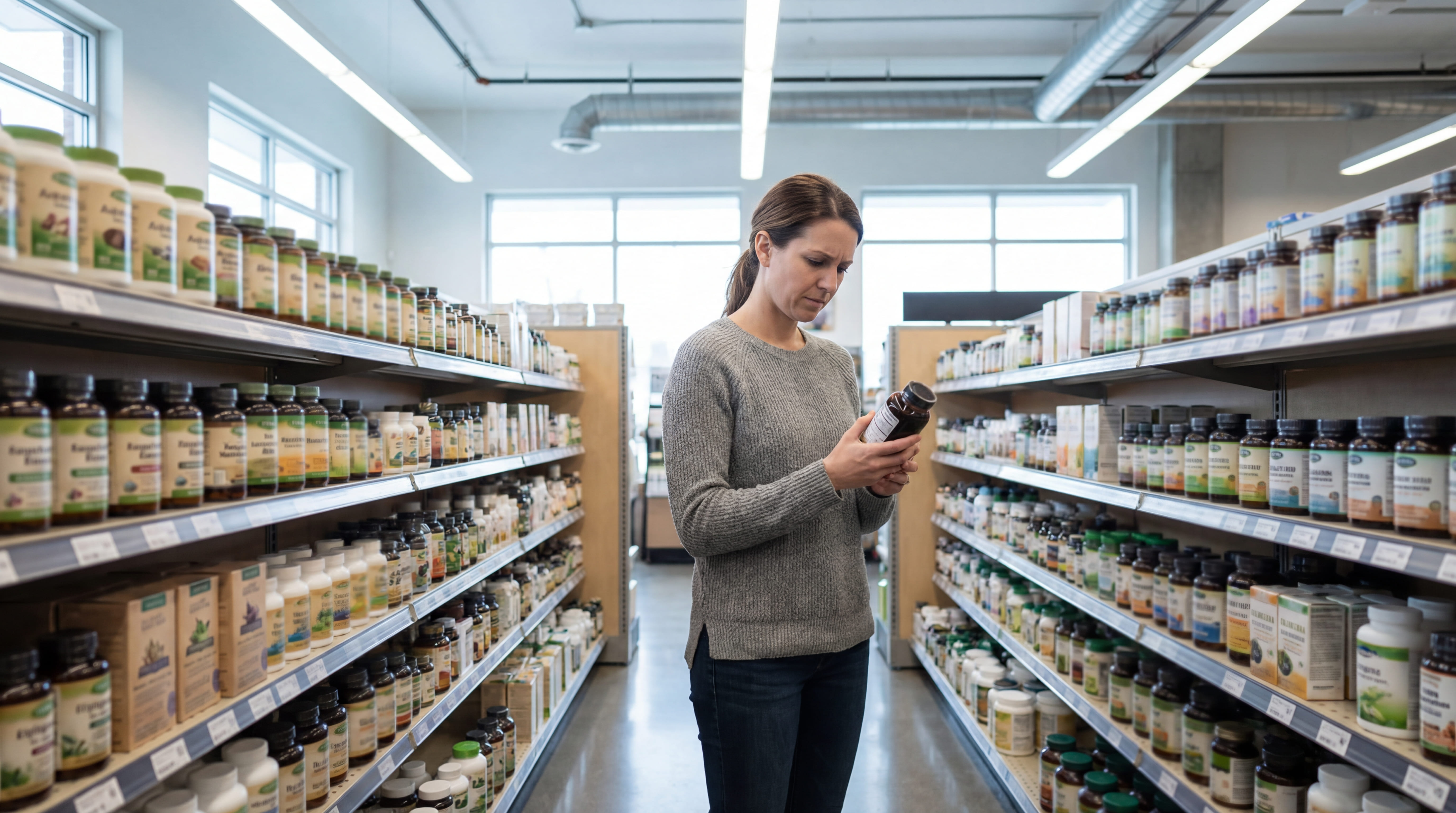
There is no supplement, patch, or food that works like a prescription GLP-1 medication. Products marketed as "natural GLP-1s" or "peptide supplements" are not regulated the same way, are not backed by the same evidence, and in many cases use language that is deliberately designed to mislead you.
Who This Helps
This is for anyone who has come across a supplement, patch, or social media post claiming to offer a "natural" alternative to GLP-1 medications like Ozempic, Wegovy, Mounjaro, or Zepbound. If you have seen the words "peptides," "natural GLP-1," or "GLP-1 support" on a product label or in a TikTok video, this article will help you understand what those terms actually mean and why you should be careful.
New to GLP-1 terminology? GLP Winner has a simple guide that explains GLP-1, GLP-2, and GIP in plain language.
Why You Are Seeing These Products Everywhere
GLP-1 medications have become some of the most talked-about drugs in the country. They are effective, they are expensive, and demand still outpaces supply in some cases. That combination has created a massive opening for supplement companies, influencers, and online retailers to sell products that borrow GLP-1 language without offering anything close to the same results (PBS News).
Here is what that looks like in practice. You open TikTok or Instagram and see someone talking about a "GLP-1 patch" or a "natural peptide" for weight loss. The packaging looks medical. The language sounds scientific. And there is usually a discount code.
But these products are not FDA-approved drugs. They are supplements, which means they do not have to prove they work before they go on sale. The FDA only steps in after a product is already on the market and only if safety problems come to light (FDA).
The Myths and Why They Are Wrong
Myth 1: Berberine is "nature’s Ozempic"
This is probably the most widespread claim. Berberine is a plant compound that has been studied for its effects on blood sugar and metabolism. It does have some real science behind it, but calling it "nature’s Ozempic" is a stretch that misleads people about what it can actually do (Pharmacy Times).
Here is the key difference. Berberine works by activating an enzyme called AMPK, which plays a role in metabolism and energy. GLP-1 medications like semaglutide work by directly activating GLP-1 receptors, which trigger a completely different set of hormonal pathways that control appetite, digestion, and blood sugar. They are not the same mechanism.
The results are not comparable either. Clinical trials show that semaglutide produces an average of about 15% body weight loss over 68 weeks. A meta-analysis of berberine studies found an average weight loss of about 4 pounds (News Medical). That is not a minor difference. It is a completely different category of effect.
Myth 2: "GLP-1 patches" deliver the same results as GLP-1 drugs
GLP-1 patches are one of the fastest-growing product categories on TikTok Shop. They typically contain ingredients like berberine, green tea extract, chromium, garcinia cambogia, and various vitamins delivered through an adhesive patch on the skin (Media Matters).
There are no FDA-approved GLP-1 patches. None of these products contain actual GLP-1 medication. And there is no research showing that berberine or any of these other ingredients are effective when delivered through the skin (PBS News). If you can buy it without a prescription, it is not a GLP-1 drug.
GLP Winner covered this topic in detail: Are GLP-1 Patches Legit or Just Hype?
Myth 3: Certain foods "activate your GLP-1"
You may have seen posts or articles claiming that specific foods like yerba mate, apple cider vinegar, or cinnamon can "activate" or "boost" your natural GLP-1 levels. There is a grain of truth here, but it is being stretched well beyond what the science supports.
Your body does produce GLP-1 naturally. It is a hormone released in your gut when you eat. Many foods trigger a small, brief release of GLP-1 as part of normal digestion. But the natural GLP-1 your body makes has a half-life of about two minutes. It breaks down almost immediately (PubMed).
Prescription GLP-1 medications like semaglutide are engineered to resist that breakdown. Semaglutide has a half-life of about seven days. That is why it works as a once-weekly injection that provides continuous appetite and blood sugar control. No food or supplement comes anywhere close to replicating that.
Myth 4: "Peptide supplements" are a safe, natural alternative to prescription drugs
The word "peptide" has become a buzzword in the wellness space. Peptides are simply short chains of amino acids, which are the building blocks of proteins. Your body is full of them. Insulin is a peptide. GLP-1 is a peptide. That does not mean that products labeled "peptide supplements" are safe or effective (PBS News).
Some peptides being sold online, like BPC-157, have never been tested in humans in a controlled clinical trial. The FDA has classified BPC-157 as a Category 2 bulk drug substance, meaning it cannot legally be used in compounded medications due to safety concerns (FDA). Despite this, it is widely available online, often marketed as a "research chemical" or "dietary supplement."
Influencers have been found promoting these products while holding affiliate codes with the retailers selling them (STAT News). That is not health advice. That is advertising.
What this means for you: If a product uses the word "peptide" as a selling point, ask two questions: has it been tested in humans, and is it FDA-approved? If the answer to either is no, you are taking on risk that has not been measured.
Language to Watch For
One of the most effective tools these products use is language that sounds medical without actually being medical. Here are some common phrases to be aware of when you see them on a product label, ad, or social media post.
- "GLP-1 support" or "GLP-1 activating" – These phrases are designed to make you think of Ozempic or Wegovy. But no supplement activates GLP-1 receptors the way a prescription GLP-1 medication does.
- "Natural GLP-1" or "nature’s Ozempic" – Marketing language. There is no natural product that produces the same effect as a GLP-1 receptor agonist.
- "Peptide blend" or "bioactive peptides" – Vague terms that sound scientific but do not tell you what is actually in the product or whether it has been tested.
- "Clinically studied ingredients" – This does not mean the product itself was studied. It usually means one ingredient was tested in a small study, often at a different dose or in a different form than what is in the product.
- "FDA-registered facility" – When used by supplement companies, this is not the same as FDA-approved. Any facility that manufactures supplements is required to register with the FDA. It does not mean the product has been reviewed or approved. Note: this is different from compounded pharmacies, which are addressed below.
- "Same active ingredient" or "generic version" – The FDA has specifically warned companies against using this language for compounded GLP-1 products. Compounded drugs are not generics and are not equivalent to FDA-approved medications.
The FDA issued 30 warning letters to telehealth companies for using exactly this kind of misleading language (FDA). The FTC has also taken enforcement action against companies using deceptive weight loss claims tied to GLP-1 branding (FTC).
Why This Is Happening Now
There are a few reasons this kind of marketing has exploded recently.
First, GLP-1 medications are expensive. Even with the recent pricing changes and the Novo Nordisk and Hims partnership, many people still cannot afford or access prescription GLP-1 treatment. That creates demand for cheaper alternatives, and supplement companies are filling that gap with products that look and sound like the real thing.
Second, supplements are not regulated the same way as drugs. The FDA does not approve supplements before they go on sale. Companies can make broad health claims as long as they include a small disclaimer that the product has not been evaluated by the FDA (FDA). Most people do not read the fine print.
Third, social media has made it easy for anyone to promote a product to millions of people. Influencers with no medical training can recommend a "GLP-1 patch" or a "peptide stack" to their followers, and many of those followers trust the recommendation because it comes from someone they follow regularly (STAT News).
For more context on how pricing works, GLP Winner has covered why Ozempic costs $900 when it costs $3 to make and the new compounding laws that could affect GLP-1 access in 2026.
What About Compounded GLP-1 Medications?
It is worth calling out an important distinction here. The products we are talking about in this article, supplements, patches, and unregulated peptides, are not the same thing as compounded GLP-1 medications from licensed pharmacies.
Compounded pharmacies operate under a completely different set of rules. They are licensed by state pharmacy boards, staffed by licensed pharmacists, and subject to regulatory oversight. There are two types: 503A pharmacies, which prepare medications based on individual prescriptions, and 503B outsourcing facilities, which produce larger batches under stricter FDA manufacturing standards and are subject to regular FDA inspections (FDA).
When you get a compounded GLP-1 medication from a licensed pharmacy, you are getting a product that was prepared by a pharmacist using pharmaceutical-grade ingredients, dispensed with a prescription from a licensed provider, and made in a facility that is accountable to state and federal regulators.
That is fundamentally different from buying a "GLP-1 support" supplement on TikTok Shop or ordering a peptide vial from an overseas wholesaler with no pharmacy license and no oversight.
GLP Winner has a detailed breakdown of what 503A and 503B compounding pharmacies are and how they differ. If you are exploring compounded options, that is a good place to start understanding what to look for.
How to Protect Yourself
1. If it does not require a prescription, it is not a GLP-1 drug
This is the simplest rule. GLP-1 receptor agonists are prescription medications. They require a doctor, a prescription, and oversight. Anything you can buy over the counter or on TikTok Shop without a prescription is a supplement, not a medication.
2. Check for FDA approval, not just FDA registration
Supplements are manufactured in FDA-registered facilities, but that does not mean the FDA has reviewed or approved the product. Look for actual FDA approval, which only applies to prescription and over-the-counter drugs that have gone through clinical trials.
3. Be skeptical of influencer recommendations
If someone is promoting a health product with a discount code, they are likely earning money from the sale. That does not automatically make the product bad, but it does mean the recommendation is not unbiased.
4. Talk to your doctor before trying anything new
If you are interested in GLP-1 treatment, talk to your doctor about FDA-approved options. If cost is a barrier, ask about patient assistance programs, compounding pharmacies that operate within FDA guidelines, or the GLP Winner comparison tool to find the most affordable providers.
You can start comparing providers and pricing through the GLP Winner comparison tool.
5. Look at the source list
If an article, video, or product page does not cite specific studies or regulatory sources, treat the claims with extra caution. GLP Winner sources every article with links to the original research. If you want to learn more about spotting unreliable products, read How Can I Spot Counterfeit Ozempic?
Final Takeaway
The interest in GLP-1 medications is real, and it makes sense that people are looking for more affordable or more accessible options. But the products being marketed as "natural GLP-1s" or "peptide supplements" are not those options.
No supplement, patch, or food works like a prescription GLP-1 medication. The science is clear on that. And the language these products use is designed to blur that line on purpose.
The best thing you can do is stay informed. Know what the terms mean. Ask where the evidence is. And talk to a doctor before making decisions about your health based on a social media post.
If you enjoy posts like these, you can subscribe to receive newsletter updates.
Find a provider in your state
Answer a few questions and see live pricing from the providers that ship where you live.
Sources
Keep Reading

Updated for 2026. What GLP-1s do, how Wegovy, Ozempic, Zepbound, Mounjaro and the new pills differ, and where compounded options stand now.
Curious about GLP-1 patches on TikTok? Learn what is real, what is hype, and how to stay safe with GLP-1 treatments that are actually FDA approved.
Learn how to identify fake Ozempic, check packaging and lot numbers, and avoid online GLP-1 scams. Simple safety tips for families.
Written by
 Lauren Pescarus
Lauren Pescarus is a team member with GLP Winner where she works on marketing, content creation, and operations. She has over 10 years experience in the content creation space, including in the GLP-1 space where she works to stay on top of access news, research updates, and lifestyle tips guided by science.