Are Peptides Safe? A Plain-Language Guide to What's Legitimate and What's Risky
Author
Date Published
- Twitter
- Facebook
- LinkedIn
- Instagram
- Copy Link

Some peptides are safe when a doctor prescribes them and a licensed pharmacy fills them, and others sold online carry real risks because no one has checked them for safety or quality (FDA). The word "peptide" covers a lot of ground, so the safety question is really about which peptide, from what source, and prescribed by whom. This guide walks through how to tell the difference, in plain language, without telling you what to take.
Who This Helps
This is for anyone who has seen "peptides" in a wellness ad, a social feed, or a friend's group chat and wondered whether they are safe. It helps people already on a GLP-1 medication who keep hearing the word "peptide" and want to know how it relates to their prescription. It also helps anyone comparing weight-loss options who wants to shop carefully and avoid sources that could put their health at risk.
The Quick Answer
A peptide is just a short chain of amino acids, which are the building blocks of proteins, and your body makes thousands of them naturally. Several peptides are FDA-approved medicines, including semaglutide and tirzepatide, the active ingredients in well-known weight-loss and diabetes drugs (FDA). So "peptide" does not mean "unapproved" or "dangerous." The safety problem shows up when a peptide is sold without FDA approval, often online and labeled "for research only," because nobody has reviewed it for safety, quality, or correct dosing (FDA).
Does This Change Anything About Your Prescription?
If you take an FDA-approved GLP-1 medication that your doctor prescribed and a licensed pharmacy filled, nothing here changes that. FDA-approved medicines go through a review for safety, effectiveness, and quality before they reach you, which is exactly the step that "research" peptides skip (FDA). You can read more about how these medicines fit together in our explainer on what peptides are and how they differ from GLP-1 medications. If you want to compare specific medicines, you can look at Ozempic, Wegovy, Mounjaro, and Zepbound side by side.
Find a provider in your state
Answer a few questions and see live pricing from the providers that ship where you live.
What "Peptide" Actually Means
Peptides are small molecules made of amino acids, and they act like messengers that tell parts of your body what to do. Insulin is a peptide, and so are the GLP-1 receptor agonists used for diabetes and weight loss, which is the medical term for medications that activate a receptor in your body that helps with blood sugar and appetite (FDA). The takeaway is simple: a peptide can be a carefully made, FDA-approved medicine, or it can be an untested powder shipped from an unknown factory. The label matters far more than the word.
Where Peptides Come From: Three Different Buckets
Peptides reach people through three very different paths, and the safety picture is not the same for each.
The first bucket is FDA-approved medicines. These are reviewed for safety, effectiveness, and quality before they are sold, and you get them with a prescription filled at a state-licensed pharmacy (FDA).
The second bucket is compounded GLP-1 medications made by licensed pharmacies. A compounded medicine is a customized version a pharmacy makes for a specific patient, and it can be appropriate when a person's medical need cannot be met by an FDA-approved drug (FDA). These are not the same as the products in the third bucket.
The third bucket is "research" peptides sold directly to consumers online, often labeled "for research purposes" or "not for human consumption." The FDA has warned companies that sold unapproved peptide drugs this way while including dosing instructions for people, and the agency says these products are of unknown quality and may be harmful (FDA).
What About Compounded GLP-1 Medications?
Compounded GLP-1 products from licensed pharmacies are not the same as the supplements or "research" peptides you see advertised online, and that difference is worth understanding. A licensed compounding pharmacy operates inside a legal framework, while grey-market sellers and supplements do not (FDA). There are two main types of licensed compounding pharmacies, and we break down what each one does in our guide to 503A versus 503B compounding pharmacies.
Compounded drugs are not FDA-approved finished medicines, which means the agency does not review them for safety, effectiveness, or quality before they are sold (FDA). A doctor and patient may still choose a compounded GLP-1 product together for good reasons. The practical step is to confirm the pharmacy is licensed and to ask questions about how the medicine is made and shipped. If you want the fuller picture, see our explainer on how compounding pharmacies are regulated.
Why "Research" Peptides Sold Online Carry Real Risks
The biggest safety gap is the products that skip FDA review entirely. Because injectable drugs go straight past the body's natural defenses against germs and toxins, the FDA says unapproved injectable peptides of unknown quality can pose a real risk of harm (FDA). In early 2026 the FDA sent warning letters to peptide sellers like Gram Peptides for offering products such as "Retatrutide" and "Tirzepatide" for sale as unapproved new drugs (FDA).
Some peptides that get a lot of online buzz have specific safety questions attached. The FDA has said that compounded drugs containing BPC-157 may carry a risk of immune reactions and impurities, and that the agency lacks enough information to know whether the drug would cause harm when given to people (FDA). Several other popular peptides sit in the same position, flagged for the same kinds of concerns and not cleared for general compounding (FDA).
Dosing is its own hazard with anything sold as a powder you mix and measure yourself. The FDA has received reports of serious side effects, some leading to hospital stays, that may be tied to dosing errors with compounded injectable GLP-1 products (FDA). When there is no pharmacist preparing the exact dose, the chance of a measuring mistake goes up.
How to Tell a Safer Source From a Risky One
You do not need a chemistry degree to shop more safely. A few habits do most of the work.
Get a prescription from a licensed clinician and fill it at a state-licensed pharmacy, which is the FDA's core recommendation for anyone using these medicines (FDA). The clinician who signs your prescription should be licensed in your state, and you can look up a provider's license through your state medical board (Federation of State Medical Boards).
Check what arrives at your door. Injectable GLP-1 medicines need refrigeration, and the FDA recommends not using any that show up warm or without enough ice (FDA). The agency has also seen fraudulent products with fake or misspelled pharmacy details on the label, so it suggests reading labels closely and contacting the pharmacy if something looks off (FDA).
When you buy any medicine online, use the FDA's BeSafeRx resources to confirm you are dealing with a real, state-licensed pharmacy rather than a look-alike site (FDA). If a seller offers an injectable without any prescription and calls it "research only," that is a sign to step back.
What If Your Medication Arrives Warm?
Injectable GLP-1 medicines are meant to arrive cold and go into the refrigerator right away, and the FDA recommends not using any that show up warm or without enough ice (FDA). You may have seen messages telling you that a product which arrived at room temperature is still fine to use, and that can leave you unsure what to believe. The honest answer depends on the product and on who tested it.
The FDA-approved medicines are built with a tested room-temperature window, so some time out of the fridge is not automatically a problem as long as it stays inside the limits printed on the label. An Ozempic pen, once it is in use, can be kept at room temperature between 59°F and 86°F for up to 56 days (Ozempic Prescribing Information). A Wegovy single-dose pen can be kept between 46°F and 86°F for up to 28 days before the cap is removed, and it should not be used if it has been frozen (Wegovy Prescribing Information). A Zepbound single-dose pen or vial can sit at up to 86°F for up to 21 days, though once it has been at room temperature it should not go back in the refrigerator (Zepbound Prescribing Information).
Compounded GLP-1 products work differently because they are not FDA-approved, so they do not carry that same standard label window (FDA). A licensed compounding pharmacy sets its own storage instructions and a beyond-use date based on its own testing, and those written instructions are the ones to follow. If your medicine arrived warmer than you expected, the safest step is to keep it cool, read the storage instructions that came with it, and call the dispensing pharmacy to confirm before you use it. A pharmacy that has tested its product can tell you the exact temperature and time limits it stands behind, which is far more useful than a general note that it is "fine."
Language to Watch For
Marketing around peptides often uses phrases that sound reassuring but hide a real gap. Here are a few worth recognizing.
- "For research purposes only" or "not for human consumption." The FDA has warned sellers who used this exact labeling while shipping injectable peptides to people with dosing instructions, calling the products unapproved and of unknown quality (FDA). The wording helps the seller stay around the rules and gives you no real assurance about quality.
- "Same as" an approved drug, or "pharmaceutical grade." The FDA has stated that compounded GLP-1 products cannot be marketed as generic versions of or the same as FDA-approved drugs (FDA). Treat a confident "same as" claim as marketing language and ask the pharmacy to back it up.
- "Doctor-trusted" peptides with no way to reach a doctor. The FDA's basic guidance is to get a prescription from a licensed provider and fill it at a licensed pharmacy (FDA). If a site sells injectables with no prescription step at all, the claim does not hold up.
What This Means for You
The safety question is less about the word "peptide" and more about the path the peptide took to reach you. An FDA-approved medicine from a licensed pharmacy and a powder from a "research only" website are worlds apart, even if both get called peptides. Knowing which bucket you are looking at, and asking a few plain questions about the source, puts you in a much stronger position to choose well with your doctor.
Final Takeaway
Peptides are not one thing, and they are not automatically risky or automatically safe. Some are trusted medicines you get with a prescription, and others are untested products sold around the rules. The dividing line is review and oversight: who made it, who checked it, and who is guiding your dose. You do not have to memorize chemistry to protect yourself. You just have to know the source, confirm the pharmacy and prescriber are licensed, and bring your questions to a clinician you trust. That steady approach serves you far better than any ad ever will.
If you enjoy posts like these, you can subscribe to receive newsletter updates.
Frequently Asked Questions
Are all peptides unapproved or experimental? No. Several peptides are FDA-approved medicines, including semaglutide and tirzepatide, which are the active ingredients in widely used GLP-1 weight-loss and diabetes drugs. The word "peptide" describes a type of molecule, not a level of safety, so what matters is whether that specific peptide is approved and how you obtained it.
Why does the FDA warn about peptides labeled "for research only"? Products labeled "for research purposes" or "not for human consumption" have not been reviewed for safety, quality, or correct dosing, yet some are sold to people for human use with dosing instructions. The FDA considers these unapproved drugs of unknown quality that may be harmful, especially because many are injectables.
Is a compounded GLP-1 medication the same as a "research" peptide from a website? No. A compounded GLP-1 product from a state-licensed pharmacy is made within a legal framework for a specific patient, while a grey-market "research" peptide is sold outside those rules. Compounded medicines are still not FDA-approved finished drugs, so confirming the pharmacy is licensed and asking how the product is made and shipped is important.
How can I check that a peptide source is legitimate? Use a prescription from a clinician licensed in your state and fill it at a state-licensed pharmacy, and look up the provider through your state medical board. The FDA's BeSafeRx resources can help you confirm an online pharmacy is real rather than a look-alike, and you should be cautious of any site selling injectables with no prescription step.
Can taking an untested peptide affect my current GLP-1 treatment? Anything you inject can carry risks of contamination, wrong dosing, or unexpected reactions, and untested peptides have no quality review behind them. If you are on an FDA-approved or pharmacy-compounded GLP-1 medication, the safest move is to talk with your prescriber before adding anything, rather than mixing in a product of unknown quality.
Find a provider in your state
Answer a few questions and see live pricing from the providers that ship where you live.
Keep Reading
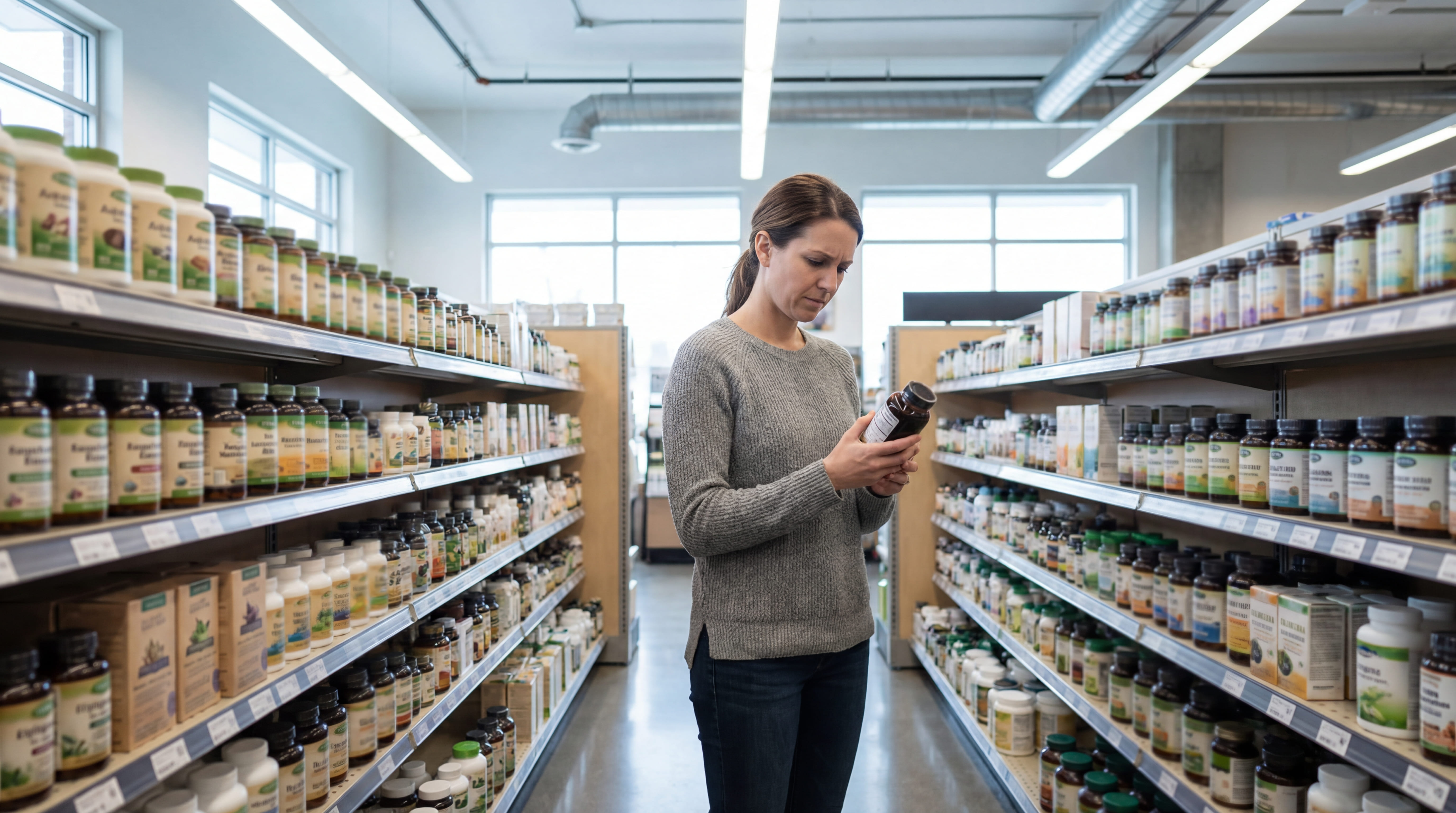
Products marketed as "natural GLP-1s" and peptide supplements are everywhere. Here is what the science says and how to protect yourself.
Not all peptides are GLP-1s. Learn the difference between FDA-approved GLP-1s, pharmacy-compounded, grey market, and wellness peptides.

Learn what grey-market peptides are, why they’re risky, and how to choose safer FDA-approved or properly compounded options instead.
Categories
Written by
 Lauren Pescarus
Lauren Pescarus is a team member with GLP Winner where she works on marketing, content creation, and operations. She has over 10 years experience in the content creation space, including in the GLP-1 space where she works to stay on top of access news, research updates, and lifestyle tips guided by science.