How to Time Your GLP-1 Dose Around Travel or Big Events
Author
Date Published
- Twitter
- Facebook
- LinkedIn
- Instagram
- Copy Link
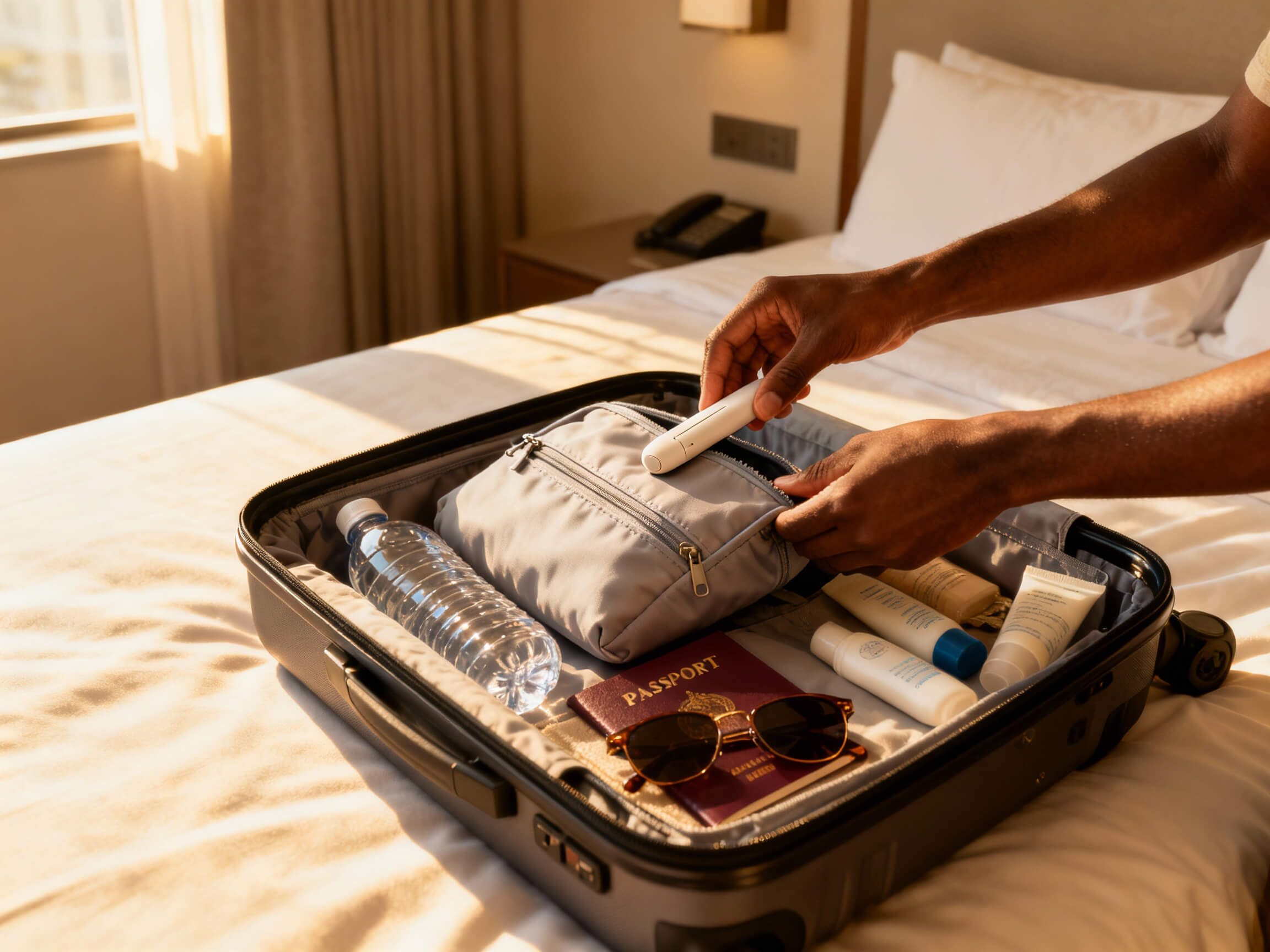
Traveling or attending major events often means disrupted routines, shifting time zones, and unexpected logistics. If you’re on a weekly injectable GLP-1 medication (for example Semaglutide under brand names like Ozempic® or Wegovy®), staying consistent matters. According to the Mayo Clinic, semaglutide is administered once-weekly, and it’s permissible at any time of day—what matters most is that the interval between doses remains consistent. (Mayo Clinic)
Here are practical steps and considerations.
This guide is for general education only. It is not medical advice. GLP-1 medications can affect people differently, especially during travel. Always talk with your healthcare provider about your specific dosing schedule, storage needs, and any changes you want to make to your routine.
Maintain the same day of the week if possible
For weekly GLP-1 injections, most guidance suggests sticking to your usual day. A travel-day shift of a few hours is usually acceptable. For example, the prescribing information for Ozempic® states: “Administer OZEMPIC once weekly, on the same day each week, at any time of day, with or without meals.” (FDA Prescribing Information – Ozempic®)
Tip: If you normally inject on Monday evening at home, and you fly to a destination in a different time zone, pick a time on that Monday local time for your shot if feasible. Ask your healthcare provider if major shifts (e.g., crossing many time-zones) need special adjustments.
Handle missed doses wisely
If travel causes you to miss your scheduled injection, there’s clear guidance: Do not double up. According to FDA labeling: “If a dose is missed, administer OZEMPIC as soon as possible within 5 days after the missed dose. If more than 5 days have passed, skip the missed dose and administer the next dose on the regularly scheduled day.” (FDA Prescribing Information – Ozempic®)
Tip: Set a travel reminder (phone alarm) for injection day to reduce the risk of “oops”.
Account for time-zone changes
If you’re travelling across time zones, the day of the week for your dose generally stays the same, but local clock time may shift. The FDA states: “The day of weekly administration can be changed if necessary as long as the time between two doses is at least 2 days (>48 hours).” (FDA Prescribing Information – Ozempic®)
Example: You usually take your dose Sunday at 8 pm Eastern Time. You fly to a destination 3 hours ahead and land Sunday at noon local time. You could still inject Sunday evening local time.
For very large time-zone changes (>8–12 hours), ask your healthcare provider for personalized timing.
Storage & transport logistics matter
Travel often means your medication may be exposed to different temperatures. Proper storage ensures the dose you take is still effective.
Key data points:
- After first use, the Ozempic® pen can be stored at room temperature (59–86°F / 15–30°C) for up to 56 days.
- “Store your pen in use for 56 days at room temperature between 59°F to 86°F (15°C to 30°C) or in a refrigerator between 36°F to 46°F (2°C to 8°C). Protect from heat and sunlight.” (FDA Prescribing Information – Ozempic®).
- Manufacturer guidance reiterates storage requirements for GLP-1 pens (Novo Nordisk Medical – Storage & Stability).
Tip: Always keep your medication in your carry-on — never checked bags — and use an insulated pouch to avoid heat exposure.
Align event schedules and injection timing for best comfort
Big events often mean irregular meals, alcohol, late nights, or long stretches of activity. Since GLP-1 medications can influence digestion and appetite, timing your dose smartly helps you stay comfortable.
- Avoid injecting immediately before a long fast (such as an all-day conference).
- If you’ll be eating late, you may want to inject earlier so the timing isn’t disruptive.
Tip: For long days or late nights, consider injecting earlier to prevent scrambling at the end of the evening.
Plan for “what-ifs”
Travel comes with uncertainties — delays, lost luggage, schedule changes.
- Bring an extra dose or backup pen if your provider allows.
- Keep a copy of your prescription and your provider’s contact info handy.
- Confirm hotel refrigeration availability if you need it, based on your medication’s storage rules.
Post-travel check-in
After travel:
- Return to your normal schedule as soon as possible.
- Notice any changes in nausea, appetite, or energy — travel can temporarily affect digestion and sleep.
- One off-schedule dose is not harmful if you return to your normal weekly timing (FDA Prescribing Information – Ozempic®).
Summary
Travel doesn’t have to disrupt your GLP-1 routine. Keep the same weekly dose day, adjust for local time, protect your medication during transport, and handle delays with a plan. Reset your schedule as soon as you return.
FAQ
Q: Can I change the day I take my weekly GLP-1 because I’m traveling?
A: It’s possible but not ideal. Keep the same day, but shifting the clock time is fine. The FDA allows changing the day only if at least 48 hours passes between doses.
Q: What happens if I miss a GLP-1 dose while traveling?
A: Take it within 5 days if possible. If more than 5 days have passed, skip and return to your normal schedule. Never double dose.
Q: Does changing time zones affect how often I need to inject?
A: No. Keep the same weekly interval. A small time shift is fine; intervals must remain at least 48 hours.
Q: How should I store my GLP-1 while traveling?
A: Use your carry-on, avoid extreme temperatures, keep original packaging, and store in a refrigerator upon arrival if required.
If you enjoy posts like these, you can subscribe to receive newsletter updates.
Sources
Find a provider in your state
Answer a few questions and see live pricing from the providers that ship where you live.
Keep Reading
Unsure about small ‘extra’ in your GLP-1 vial? Learn what’s normal, what’s safe, and when to call your provider — based on FDA and clinical guidance.
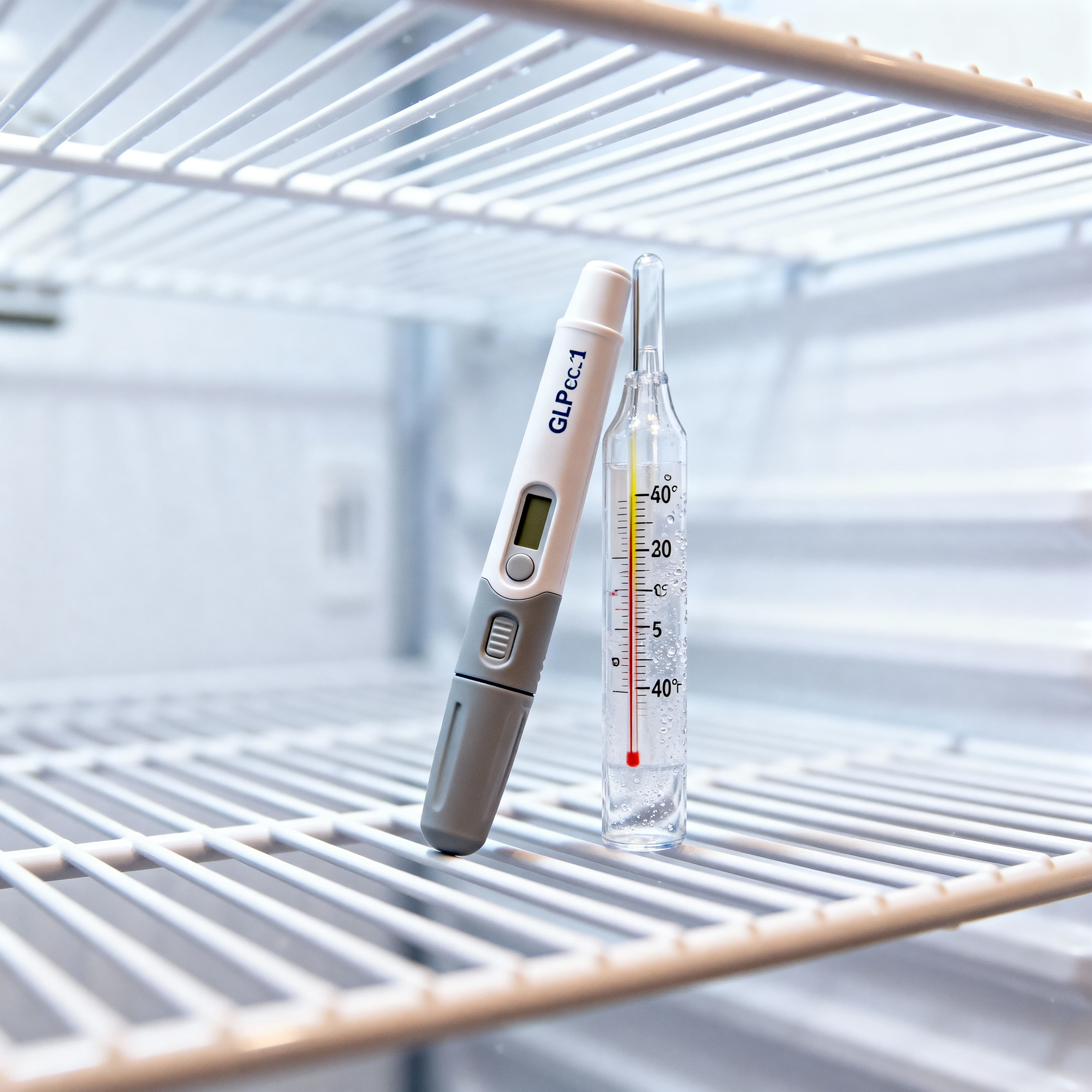
Your GLP-1 medication really can expire. Learn what expiration and beyond-use dates mean, when to discard, and how to keep injections safe.

Feeling nauseous on a GLP-1 medication? Here are 10 practical, science-backed ways to ease nausea and stay on track safely.
Written by
 Lauren Pescarus
Lauren Pescarus is a team member with GLP Winner where she works on marketing, content creation, and operations. She has over 10 years experience in the content creation space, including in the GLP-1 space where she works to stay on top of access news, research updates, and lifestyle tips guided by science.