Walking Gets You Most of the Longevity Benefit, and Tops Out Sooner Than You Think
Author
Date Published
- Twitter
- Facebook
- LinkedIn
- Instagram
- Copy Link
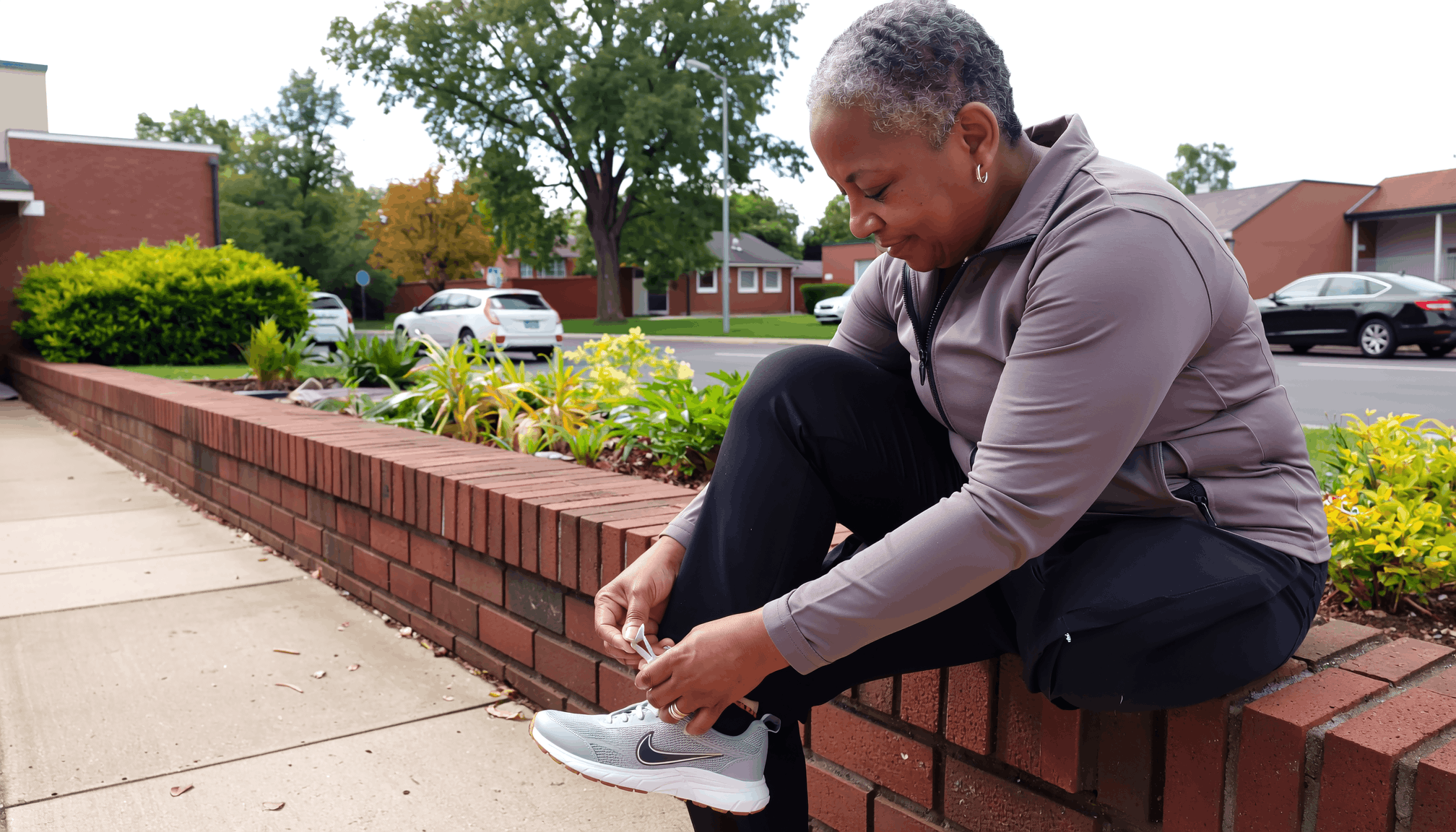
If walking is your exercise, the research is largely on your side, but you won’t see top results unless you’re combining it with other exercises. In pooled data from 47,471 adults, the mortality benefit of daily steps plateaued at 6,000 to 8,000 steps a day for people over 60, well below the 10,000 everyone quotes. The federal guidelines do list a second component walking doesn't cover, and we'll get to it, but nothing here says your walk isn't enough to matter.
The step counts that matter are lower than the marketing number
A pooled analysis of 15 studies tracking 47,471 adults with wearable devices, with 3,013 deaths over a median 7.1 years, found something useful: the benefit levels off, and it levels off earlier as you age. Adults 60 and over plateaued at 6,000 to 8,000 steps a day. Adults under 60 kept gaining steps up to 8,000 to 10,000 (Lancet Public Health).
A separate study of 16,741 women averaging 72 years old found meaningfully lower mortality at 4,400 steps a day compared with 2,700, with the curve flattening around 7,500 (JAMA Internal Medicine). And across 17 studies covering 226,889 people, each additional 1,000 steps a day was associated with about 15% lower all-cause mortality (European Journal of Preventive Cardiology).
Two caveats we'd rather say out loud. These are all observational studies that follow people over time, so they show association and can't prove that walking more causes longer life. And the 10,000 figure was never a medical recommendation. It came from the name of a Japanese pedometer sold around the 1964 Tokyo Olympics, the manpo-kei, which translates as ten-thousand-step meter.
How fast you walk matters less than how much
Two large studies found no independent effect of walking pace once total daily steps were accounted for (JAMA). A third, in 78,500 UK adults, found that a faster peak 30-minute cadence did add something on top of step volume.
The research disagrees, in other words, and volume is the finding that replicates better over pace. You don't need to walk briskly for your walk to count.
Walking covers one of the two things the guidelines ask for
The Physical Activity Guidelines for Americans ask adults for 150 to 300 minutes of moderate aerobic activity a week, which walking satisfies completely. They then add a second line: adults should do "muscle-strengthening activities of moderate or greater intensity and that involve all major muscle groups on 2 or more days a week" (US Department of Health and Human Services). For adults 65 and over there's a third component, balance training.
Before you start to feel like you’re not doing enough, the same document reports that roughly 80% of US adults miss both components while about half manage the aerobic one. If you're walking regularly, you're already in the better half. The guidelines' own first principle is that some physical activity is better than none.
Find a provider in your state
Answer a few questions and see live pricing from the providers that ship where you live.
There's a specific reason strength gets mentioned on a GLP-1
A review of 40 studies using DXA body scans found that on average 29.1% of the weight lost on these medications is fat-free mass rather than fat (Obesity).
Fat-free mass isn't only muscle. It includes water, glycogen and bone minerals. The standard deviation was 19.0%, individual studies ranged from roughly 7% to 47%, and three of the 40 found fat-free mass went up. The review authors' own conclusion is that these figures sit "in the upper range" of what other non-surgical weight loss produces, against a diet-only baseline of about 25%. That means you just need to be diligent about getting up and getting moving, more so if you’re on a GLP-1.
Whether exercise protects lean mass specifically on these drugs is thinner than you'd hope. The same review found only one trial with a resistance-exercise arm, on an older medication, and the exercise was mostly aerobic. The direction is plausible and the mechanism is well established in ordinary weight loss. It just hasn't been tested much here. Protein is the other lever, and our federal protein target guide has the numbers.
Starting from a standing start is the normal case, and the guidelines say so
If you're carrying a lot of weight, or you're older, or your joints hurt, going straight to weighted training isn't the assignment. The federal guidelines say it plainly: inactive people should "start low and go slow" by beginning with lower intensity activities and gradually increasing how often and how long they're done.
Strength work also doesn't require a gym. A 2026 American College of Sports Medicine review of 137 systematic reviews covering more than 30,000 people found that strength improves with circuit training, elastic band training and home-based training (ACSM). Bands and bodyweight are real training, and if that’s more accessible to you they are doing the work you need.
One thing that argues for going gently rather than hard: researchers using wearable data from 753 adults found that activity went down after starting a GLP-1, from 5,047 to 4,487 daily steps, with the largest drops in people with joint or muscle pain (presented at ENDO 2026). That was a conference presentation rather than a peer-reviewed paper, and it wasn't a controlled study. But it suggests the barrier is physical rather than a question of motivation. We wrote about that in why people move less on a GLP-1.
One safety note that is actually on the label
The Wegovy label carries postmarketing reports of acute kidney injury, and notes that most occurred in people who had nausea, vomiting or diarrhea leading to dehydration (prescribing information). It tells patients to drink fluids.
Exercising while you're dehydrated and eating less compounds that problem. No major sports medicine or endocrine body has published exercise-specific guidance for people on these medications yet, so there isn't an authoritative rule to hand you. Raise it with your prescriber, particularly during dose increases.
Final Takeaway
Walking is real exercise, it satisfies the aerobic half of the guidelines outright, and the longevity benefit tops out lower than the number on your watch, especially after 60. That's good news, not a loophole. If that's what you can do, keep doing it.
The reason strength work gets raised on a GLP-1 is body composition, not calories. If you want to add some of these exercises, bands and bodyweight count, and the federal guidance for someone starting from low activity is to start low and go slow. Anything you add is a bonus on top of a walk that was already doing its job. If you're weighing up whether the medication is working at all, our week-six guide is the better page.
If you enjoy posts like these, you can subscribe to receive newsletter updates.
Find a provider in your state
Answer a few questions and see live pricing from the providers that ship where you live.
Keep Reading
Turnkey platforms let almost anyone launch a GLP-1 clinic, one vendor says daily. See why prices fell, where the risk sits, and the 3 names to ask for
Do GLP-1s reduce drinking? A 2026 trial says yes for people with obesity, but two trials missed their goal. What the evidence really shows.

Told to stop your GLP-1 before surgery, or to continue? Five guidance documents disagree. See what each says and what to ask your team.
Categories
Written by
 Lauren Pescarus
Lauren Pescarus is a team member with GLP Winner where she works on marketing, content creation, and operations. She has over 10 years experience in the content creation space, including in the GLP-1 space where she works to stay on top of access news, research updates, and lifestyle tips guided by science.