What to Eat in a Day on a GLP-1 (With Sample Meals)
Author
Date Published
- Twitter
- Facebook
- LinkedIn
- Instagram
- Copy Link
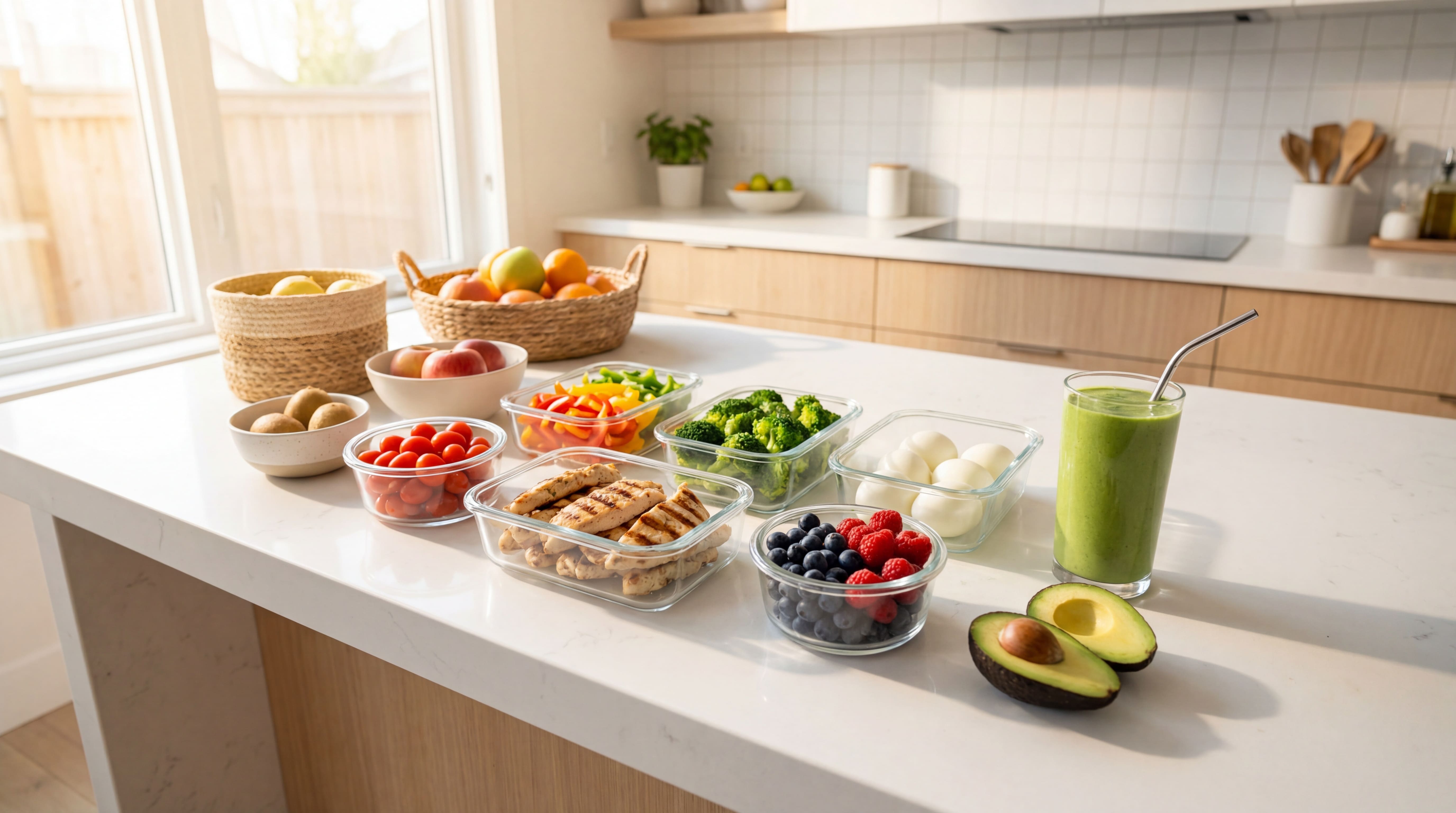
Hitting your protein, fiber, and carb targets while staying hydrated and spreading your meals across the day are the most important things you can do while taking a GLP-1 medication, which is a type of medicine that works by mimicking a natural hormone to help manage appetite and blood sugar (Ohio State University Wexner Medical Center). Here is what a full day of eating can actually look like, with macro breakdowns and practical examples you can start using today.
Why What You Eat on a GLP-1 Matters More Than You Think
GLP-1 medications like Ozempic, Wegovy, Mounjaro, and Zepbound reduce your appetite. That is the whole point. But eating less also means every bite matters more.
Research shows that roughly 40% of the weight lost on GLP-1 medications can come from lean mass, including muscle (Endocrine Society). Without enough protein, your body loses muscle along with fat. That changes your metabolism, your energy, and your long-term results.
A study published in Frontiers in Nutrition found that many GLP-1 users fall short of daily nutrient targets, especially for protein and fiber (Frontiers in Nutrition). Your appetite is lower, but your body's nutritional needs are not.
GLP Winner helps you find providers that include nutritional counseling as part of their GLP-1 programs. Not all providers offer this, so it is worth comparing.
What this means for you: The medication handles the appetite part. You still need to handle the nutrition part. Getting enough protein and nutrients while eating less food takes some planning.
How Much Protein You Actually Need
Most experts recommend 1.2 to 1.6 grams of protein per kilogram of body weight per day while on a GLP-1 medication (Endocrine Society). That sounds technical, so here is what it looks like for real people:
- If you weigh 150 pounds: aim for about 82 to 109 grams of protein per day
- If you weigh 180 pounds: aim for about 98 to 131 grams of protein per day
- If you weigh 220 pounds: aim for about 120 to 160 grams of protein per day
Spreading protein evenly across meals makes a difference. A feeding study found that distributing about 25 to 30 grams of protein per meal increased muscle protein synthesis by 25% compared to eating most of your protein at dinner (Mayo Clinic Diet).
What this means for you: Do not save all your protein for one big meal. Aim for 25 to 30 grams at each meal, and fill in with high-protein snacks between meals if you need to.
Fiber and Carbs: The Other Macros That Matter
Protein gets most of the attention on a GLP-1, but fiber and carbohydrates play important roles too.
Fiber. Constipation is one of the most common side effects of GLP-1 medications because these drugs slow down how fast food moves through your digestive system (PMC). Fiber helps keep things moving. The general recommendation is 25 to 30 grams of fiber per day (Ohio State University Wexner Medical Center). Good sources include oats, lentils, berries, broccoli, chia seeds, and whole grains. If you are not used to eating much fiber, increase it gradually. Too much too fast can make bloating and gas worse.
Carbohydrates. You do not need to cut carbs entirely on a GLP-1. Your body still needs them for energy, brain function, and exercise recovery. The key is choosing complex carbohydrates that digest slowly and keep blood sugar steady. Think sweet potatoes, brown rice, quinoa, oats, and whole grain bread. Avoid refined carbs like white bread, pastries, and sugary cereals, which can spike blood sugar and trigger nausea on a GLP-1 (Ohio State University Wexner Medical Center).
A reasonable daily target for someone on a GLP-1 eating around 1,200 to 1,600 calories is roughly 100 to 175 grams of carbohydrates and 25 to 30 grams of fiber, alongside the protein targets above. Your provider can help you dial in exact numbers based on your weight, activity level, and health goals.
GLP Winner's provider comparison shows which providers include macro tracking guidance or dietitian access as part of their programs.
What this means for you: Protein is the priority, but fiber keeps your digestion on track, and complex carbs keep your energy stable. All three macros work together. You do not need to obsess over exact numbers, but being aware of where your fiber and carbs come from makes a real difference in how you feel day to day.
A Sample Day of Eating on a GLP-1
Here are three different sample days. Each one targets roughly 80 to 100 grams of protein, 25 to 30 grams of fiber, and 100 to 160 grams of complex carbohydrates while keeping portions small enough to work with a reduced appetite. Pick the one that fits your life.
Sample Day 1: Simple and Quick
Breakfast: Two scrambled eggs with a slice of whole grain toast and half an avocado. About 20g protein, 6g fiber, 25g carbs.
Snack: A single-serve container of plain Greek yogurt with a handful of blueberries. About 15g protein, 2g fiber, 15g carbs.
Lunch: Grilled chicken breast (4 oz) over a bed of mixed greens with cherry tomatoes, cucumber, and olive oil. About 28g protein, 3g fiber, 10g carbs.
Snack: A cheese stick and a small handful of almonds. About 10g protein, 2g fiber, 5g carbs.
Dinner: Baked salmon (4 oz) with roasted sweet potato and steamed broccoli. About 25g protein, 7g fiber, 35g carbs.
Daily total: roughly 98g protein, 20g fiber, 90g carbs. Add a piece of fruit or a serving of oats to bump fiber and carbs closer to target.
Sample Day 2: Smoothie Starter
Breakfast: Protein smoothie made with one scoop of whey or pea protein, half a banana, a handful of spinach, almond milk, and a tablespoon of nut butter. About 30g protein, 4g fiber, 25g carbs.
Lunch: Turkey and cheese roll-ups (3 oz deli turkey, one slice Swiss cheese) with baby carrots and hummus. About 25g protein, 4g fiber, 20g carbs.
Snack: Cottage cheese (half cup) with sliced cucumber and a tablespoon of chia seeds. About 16g protein, 5g fiber, 8g carbs.
Dinner: Lean ground turkey stir fry (4 oz) with bell peppers, snap peas, and brown rice (half cup cooked). About 26g protein, 5g fiber, 30g carbs.
Daily total: roughly 97g protein, 18g fiber, 83g carbs. Adding a serving of berries or a small side of lentils at lunch boosts both fiber and carbs.
Sample Day 3: Plant-Forward
Breakfast: Overnight oats made with soy milk, chia seeds, and topped with a scoop of plant-based protein powder. About 25g protein, 8g fiber, 40g carbs.
Lunch: Lentil soup (one and a half cups) with a small side salad and a hard-boiled egg. About 22g protein, 10g fiber, 35g carbs.
Snack: Edamame (half cup, shelled). About 9g protein, 4g fiber, 8g carbs.
Dinner: Tofu stir fry (5 oz firm tofu) with broccoli, mushrooms, and quinoa (half cup cooked). About 28g protein, 6g fiber, 30g carbs.
Snack: A small handful of roasted chickpeas. About 7g protein, 3g fiber, 15g carbs.
Daily total: roughly 91g protein, 31g fiber, 128g carbs. This day naturally hits fiber and carb targets thanks to the legumes, oats, and quinoa.
GLP Winner has a resource library to help you pair the right provider with the right nutritional support. Some providers bundle meal planning guidance into their GLP-1 programs.
What this means for you: You do not need to follow a complicated diet. Focus on protein at every meal, keep portions manageable, and pick foods that are easy to prepare. The sample days above are a starting point you can adjust to your own taste.
Foods That Help With GLP-1 Side Effects
Nausea is the most common side effect when starting a GLP-1, and what you eat plays a big role in managing it (PMC).
Foods that tend to help:
- Ginger tea or fresh ginger sliced into hot water
- Bland, easy-to-digest foods like plain crackers, bananas, and rice during early weeks
- Small, frequent meals instead of large ones
- Room-temperature or cool foods (hot foods can worsen nausea for some people)
Foods to limit or avoid, especially early on:
- Fried or greasy foods
- Very sugary foods and drinks
- Carbonated drinks
- Large portions of any food at one sitting
Hydration also matters. GLP-1 medications can increase the risk of dehydration, especially if you experience nausea or reduced food intake (Ohio State University Wexner Medical Center). Aim for at least 64 ounces of water per day. Broth-based soups and water-rich fruits like watermelon and cucumber count toward your total.
What this means for you: If nausea is a problem, smaller meals and ginger tea are your friends. Stay ahead of dehydration by sipping water throughout the day, even when you do not feel thirsty.
The Role of Resistance Training
Nutrition is half the equation. The other half is exercise, specifically resistance training.
Research consistently shows that resistance training is the most effective way to preserve lean muscle mass during weight loss on a GLP-1 medication (Endocrine Society). You do not need a gym membership or heavy weights. Bodyweight exercises, resistance bands, or light dumbbells two to three times per week can make a measurable difference.
Pairing adequate protein with regular resistance exercise is the best-documented approach for keeping muscle while losing fat.
GLP Winner's provider comparison lets you see which providers include exercise guidance or coaching as part of their plans.
What this means for you: Eating enough protein protects your muscle. Adding resistance training protects it even more. Together, they help ensure that the weight you lose is the weight you want to lose.
Final Takeaway
What you eat on a GLP-1 matters just as much as the medication itself. The appetite reduction gives you a real advantage, but it only works long-term if you fuel your body well along the way. Protein at every meal. Water throughout the day. Foods that are simple, practical, and easy to stick with. You do not need a perfect diet. You need a steady one.
If you enjoy posts like these, you can subscribe to receive newsletter updates.
Sources
Find a provider in your state
Answer a few questions and see live pricing from the providers that ship where you live.
Keep Reading
Certain foods can worsen nausea, bloating, and reflux on GLP-1 medications. Learn which foods often trigger symptoms and which tend to help.
Learn what the new food pyramid includes, how it differs from past guidelines, and what it means for your food choices and grocery bills.
%2520(1).jpg&w=3840&q=100)
Not hungry on GLP-1s? Keep it simple: quick proteins, fiber, hydration tips, and a flavorful 20-min recipe anyone will love.
Written by
 Lauren Pescarus
Lauren Pescarus is a team member with GLP Winner where she works on marketing, content creation, and operations. She has over 10 years experience in the content creation space, including in the GLP-1 space where she works to stay on top of access news, research updates, and lifestyle tips guided by science.